
Guest post: Raw Fitness Fueling
Hey everyone! Hope your morning is off to a great start! This morning, I bring you yet another amazing guest post from a girl whom I’ve become good friends with and even had the pleasure of meeting her in New York. Gena, author of the blog Choosing Raw and a raw foods coach, never ceases to amaze me with her nutritional knowledge. I hope you enjoy this guest post on a very prevalent topic to ye ol’ bloggy: Raw Fitness Fueling 😀
________________________________________________________________________________________________
Greetings, Fitnessistas !
For those of you who don’t know me, I’m Gena (spelled kind of like Gina’s name, but pronounced like “Jenna”), and I’m the voice behind Choosing Raw, a mostly raw and all vegan blog devoted to readers of all dietary persuasions. I’m also a nutritionist and a raw foods coach in Manhattan, which means that I help clients around the country to find better health through raw foods.
I’m a little star struck to be here! I’ve been a fan of Gina’s blog for quite some time, and my admiration has only grown as her culinary star has risen! I’m also thankful to Gina for her friendship, her support of my blog, and her camaraderie as a fellow raw enthusiast. Like me, Gina appreciates both the fun and the health benefits of raw foods, but also like me, she’s not too hung up on the “raw” label (and indeed, she knows when and how to enjoy the cooked foods and meals that are important to her). She’s got a superb approach to the raw diet, and now—with a 105 degrees education behind her—I think she’s destined to bring macaroons and other raw treats to the world.
Of course, long before Gina was famous for her mad raw kitchen skillz, she was famous for her fitness savvy. And in honor of this, I thought I’d discuss a topic that I’m frequently asked about my health-conscious clients: how does one fuel for fitness in a raw lifestyle? There’s a popular misconception that a raw diet won’t and can’t provide the sustenance necessary to help athletes train and perform; I hope to show you that this doesn’t have to be so—in fact, the very opposite can be true!
The first answer to this complex question is the most obvious. To quote an over-quoted Michael Pollen, eat food, not too much, mostly plants. I’d highlight the last part of that dictum as its most critical component. Eating a plant-based diet—whether this means vegetarian/vegan or omnivorous, but with an emphasis on produce—is the best way to ensure overall health and bodily performance. Any athletic regime should spring from a place of good health and energy: it’s pretty hard to train for a marathon if simply going about daily life is a health challenge. No matter who you are and what sort of diet you hew to, eat a wide array of plant based foods in order to keep your body functioning optimally.
If you’re raw, high-raw, or an aspiring raw foodist—or even if you sort of want to experiment with the raw diet—and you also happen to lead a very active life, there are certainly additional foods and meals that you can depend on to enhance your performance.
Before I name those, though, I’ll give you the basic principles of raw nutrition for athletic performance:
1) Digestible fuel.
Did you think that protein, fat, or carbs would be first on this list? If you did, you’re not alone. The vast majority of my active clients see athletic performance as contingent on the quantity or ratio of food groups one ingests (how much protein, fat, etc.) rather than the ease and efficiency with which your body digests food.
Both matter, of course, but in my experience the single most important factor behind athletic performance (and overall function) is to eat foods that offer maximum nutrition while causing minimal bodily stress. Digesting heavy, difficult to break down and assimilate foods (and these include most animal proteins, bovine dairy, and processed food) will only deplete one’s body of the valuable energy stores necessary for athletic performance.
Plant based foods—fruits and vegetables and their juices, healthy grains, dried fruits and nuts, and the occasional soy foods, if one desires—manage to impart huge stores of energy and nutrient value without taxing the digestive tract. Animal proteins are OK, too, if you wish, but remember to eat them in moderation and to wait about three hours after you consume them to work out. (I’m aware that you’ve probably heard different time frames for this, but three hours is optimal—it will take at least that long for your body to have done the heavy lifting of digestion, and be ready to focus its energy on physical exertion.)
As a bonus, you can consider food combining (read about it here http://www.choosingraw.com/question-of-the-week-food-combining/) to keep your digestive system flowing smoothly and to ensure that your food is assimilated efficiently.
2) Alkalinity
Remember your high school chem class, when you learned about the PH scale? Well, our bodies also exist in the delicate balance between acidity and alkalinity. High acidity in the body has been linked to fatigue, depression, poor digestion, weight retention, and cellular degeneration. Many raw foodists will tell you—and I agree—that it’s at the heart of most chronic health conditions. And it’s a major factor behind sluggish athletic performance.
So which foods cause acid? Well, the main culprits are meat, bovine dairy, and refined sugar, as well as nicotine and caffeine. High acid foods place great stress on the body. By design, our lungs, renals, and other organs work hard to keep the body’s acidity low. So when blood becomes overly acidic, the body tries to “neutralize” it by a process called buffering; this means linking the acid to a “base” mineral. These include sodium, potassium, and calcium. There’s now substantial research to prove that high-PRAL foods (which are typically also high-protein foods) contribute directly to calcium loss and over-taxation of the kidneys. Why? Because our body is trying to neutralize blood acid by leaching calcium from bones and into the bloodstream. (Note to athletes: if you’re worried about bone density, this is important to remember! It’s not just about how much calcium you take in, but also how little you destroy.)
Which foods are alkalizing? You guessed it: vegetables, sprouts, low-sugar fruits, legumes, and certain grains (spelt, quinoa, and millet in particular). Greens are just about the most alkalizing foods around. So one of the major things you can do to boost your performance is eat as many greens as possible, and guzzle vegetable juice often. Your blood PH—and with it, your workouts—will be better for it!
3) Juice and Blended Salads
By now, you’ve all probably seen Gina juicing up a storm on the blog. Maybe you’re thinking, “I’d never bother with that.” Maybe you’re thinking, “looks cool, but who has the time/money for juice?” Maybe you’re just thinking “Green juice? Ew.”
Please, reconsider! When it comes to the two criteria above (digestibility and alkalinity) nothing is more effective than veggie juice—especially green juice! It’s digested with virtually no effort from your system, floods your body with nutrients and live enzymes, and provides you with tons of energy without weighing you down. What could be better for an athlete on the go?
Rather than fueling with sports drinks (high fructose corn syrup with your run, anyone?) or dubious “vitamin beverages”, go straight to the source: rely on fresh vegetable juice for the vitamins, minerals, sodium, sugars, and enzymes your body needs.
To rehydrate after a workout, fresh coconut water is another terrific option. Rich in potassium, magnesium, natural sodium, and sugar, it’s an optimal re-fuel beverage.
While not quite so easy to digest or nutrient rich as juice, blended salads (as I like to call my soup recipes) are also a terrific way to enjoy enzymes, fiber, fat, and nutrients in a highly digestible form. Some of my favorites for athletes are Creamy Zucchini (http://www.choosingraw.com/introducing-the-blended-salad/) with 2 tbsps hemp protein powder blended in, Carrot Avocado Bisque (http://zestycook.com/carrot-avocado-bisque-and-simple-sushi-rolls/) and Red Pepper and Coconut Soup (http://www.choosingraw.com/one-recipe-two-ways-red-pepper-and-coconut-soupsauce/). You’ll find many more on my blog.
If you’re in more of a sweet mood, green monsters are great, too!
4) Protein. No matter how much time I spend explaining to folks that our concerns about protein are largely inflated (http://www.choosingraw.com/faqs/), and that it’s a fairly difficult nutrient to get too little of, it’s still important for athletes—especially those of you who are working on muscle building and repair—to get adequate lean protein. The main sources of this in a high-raw vegan diet are dark, leafy greens, sprouts, sprouted legumes, nuts and seeds, and healthy grains (some raw foodists sprout these; others, like me, typically cook them). Within these, my top picks are:
Dark, leafy greens (shocker!)
I can’t say it enough: if you’re working out regularly, be sure to get a ton of leafy greens and green juice. Wheatgrass is also an ideal athletic food; in addition to the fact that it’s compositionally 20% protein (meat is 17% and eggs are 12%), wheatgrass is full of enzymes, rich in chlorophyll (which helps to boost hemoglobin in the blood), and, along with all leafy greens, it’s a great source of beta-carotene, which helps to boost immunity—an important concern when you’re training for a race or triathalon.
Dubious at my claim that sprouts are great protein sources? Believe it or not, those scrawny looking little green shoots can be up to 36% protein. They’re also full of enzymes and packed with nutrition,
Hemp (nuts or powdered)
If you’re used to relying on a soy or whey protein powder (which may be a good habit to ease up on, as many Americans take protein supplements unnecessarily), I highly recommend your switching to hemp protein instead! Hemp is a nutritional powerhouse: a rich source of polyunsaturated essential fatty acids (aka, the “good” fats), it contains all the essential amino acids and essential fatty acids. Hemp proteins are similar to proteins found in the human body, which makes them easy to assimilate quickly—unlike whey and soy proteins, which are often heavily processed. They’re terrific for athletic recovery and muscle repair, and don’t let the green color scare you: hemp protein is tasty, and the popular Nutiva brand comes in several flavors. Best of all (and unlike other protein sources), hemp protein is also rich in fiber, boasting eight natural grams per serving.
Sprouts
Dubious at my claim that sprouts are great protein sources? Believe it or not, those scrawny looking little green shoots can be up to 35% protein. They’re also full of enzymes and packed with nutrition. If you have a hard time digesting seeds or beans, try sprouting them: sprouting converts the starches in seeds and beans to simple sugars, rendering them far easier to digest.
Not all sprouts are created equal. The sprouts that most immediately come to mind are alfalfa sprouts—those whisper thin bunches you find at any deli or salad bar. These contain some nutrients, but they’re not the highest protein option. For athletes, I recommend pea shoots, sunflower sprouts (my personal favorite!), lentil sprouts, broccoli sprouts, and red clover sprouts, all of which are high protein. If you don’t like the way sprouts taste—or you’re just shy about being seen in public munching on them!—blend them into soups, stuff them into savory wraps, or even throw them in your green monster. You’ll never know the difference!
5) Fats
I spend a lot of time talking about the benefits of healthy raw fats over at my blog. In order to keep yourself fueled for athletic performance—especially for long, slow training—and to sustain your health in general, I recommend that you be vigilant about getting adequate mono and polyunsaturated fats in your diet. Great choices are almonds, flaxseeds and walnuts; avocados; flax and hemp oil; and, for you pescatarians, salmon, sardines, and mackerel.
My favorite fat for athletes? Coconuts—both the young flesh and (easier to find) coconut oil. The main ingredient of coconut oil is lauric acid. It’s a medium-chain fatty acid—a fancy name given to a group of fats that happens to be highly digestible—and it helps to improve energy, muscle repair, and endurance. Coconut oil, while controversial, has gotten an awfully bad rap. In reality, it’s been shown to help boost immunity, to have anti-viral properties, and to boost metabolism. Best of all, it’s unbelievably stable when heated, unlike other oils, which tend to change cellular structure at high temperature (a process that has proven links to carcinogenic effects).
The fats in coconut oils are converted into energy quickly. They’re a great option for athletic recovery, working faster than other fats to speed cell repair and recovery. They’re nourishing, immune-boosting, and ideal for high-performance athletes! I recommend young coconut shakes to all of my athletic clients (this is just coconut water and meat blended together), and I also recommend that they add coconut oil to their post-workout smoothies and soups.
OK. I know what you’re thinking: this is all fine and dandy, but how can you apply these dietetic guidelines to your own training schedule? To help you see how raw foods can factor into your daily eats, I’ve concocted a list of my favorite performance-boosting recipes. I hope you’ll love them!
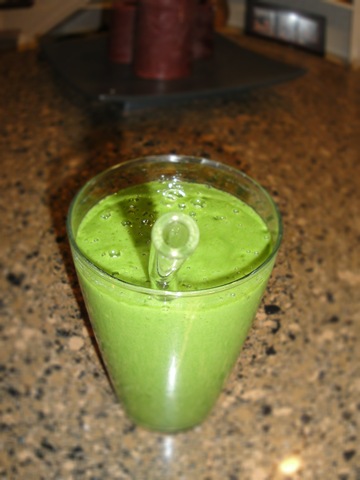
Gena’s Recovery Monster (serves 1)
Ingredients:
1 large or 2 small bananas
1 large handful romaine lettuce, spinach, or other green
1 large tbsp hemp protein powder
1/3 cup coconut water (you can substitute hemp milk if you prefer the taste, but the coconut water will hydrate more efficiently!)
1 tablespoon coconut oil
Optional: 1 date or tbsp honey/agave for extra sweetness
Procedure:
Blend all ingredients on high till creamy. Enjoy!
Strength Soup (serves 1)
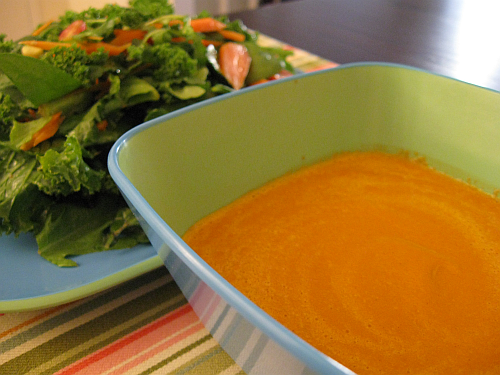
This recipe is a nod to Gina, who loves Indian flavors. It’s a spin on one of my favorite soups—Pumpkin Pie in a Bowl—but with an Indian twist. Enjoy!
Ingredients:
1 cup carrot juice
½ avocado
½ cup steamed sweet potato
2 large stalks celery
1 tbsp coconut oil
½ -1 tsp garam masala
Procedure:
Blend all ingredients on high. Drink up!
Massaged Kale Salad (serves 1)
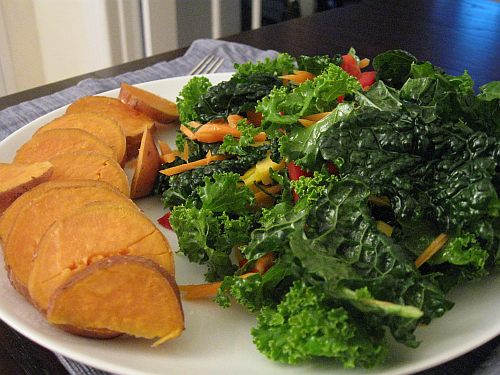
A Choosing Raw favorite. Serve alongside some steamed potatoes if you’re craving carbs, or enjoy sprinkled with hemp seeds for a bit of extra protein!
Ingredients:
About 3-4 generous cups washed and chopped kale
¼ avocado
1 tbsp olive oil (or as needed)
1 lemon
1 small tomato, chopped
½ large carrot, grated
Sea salt
Pepper
Procedure:
Pour 1 tbsp (more if needed) olive oil over kale, and sprinkle with
sea salt as desired. With clean hands, “massage” the kale so that all
of the oil is coating it and it begins to “wilt.” Throw in the avocado
and massage it, too, so that the whole bowl of kale becomes well
coated with oil and avocado. Sprinkle on lemon juice as desired (I
like a lot), and throw in tomato, carrots, and any other veggies you
desire! Top with nutritional yeast or sesame seeds if you like. I
modify this salad a lot, but it’s a crucial staple in my diet.
Cucumber and Coconut Salad with Sweet Basil Dressing (Serves 1)
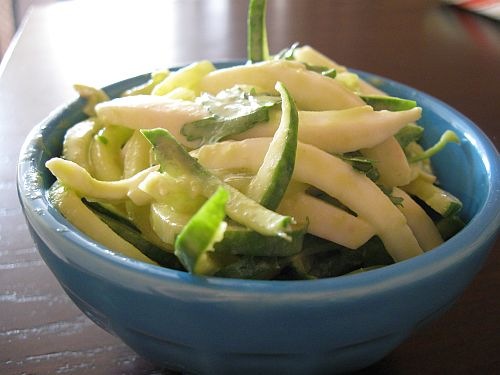
Interested in eating more coconuts, but not sure what to do with them? This salad is fresh, tasty, and easy!
For the dressing (yields 1 cup or so):
3 limes, skin and pith removed
1/4 cup water
1/2 tsp salt
1 cup basil, packed
4 tbsp raw honey or agave (you can substitute stevia here for a low-sugar variation!)
1/2 cup olive oil
Put all ingredients except the oil in a blender or food processor and blend on high until well combined. Next, with the motor running, add oil in a thin stream, until the mixture is rich and emulsified.
For the salad (serves 1-2):
1 cucumber, julienned or spiralized
Meat of 1 young coconut, chopped into thin strips*
1/4 cup cilantro, chopped
2 tbsp fresh basil, chopped
*See my post on opening young coconuts here
Toss all ingredients together. Dress with about 1/4-1/3 cup of the dressing (or to taste).
Gena’s Sprout Salad (Serves 1)
Think sprouts taste gross? Think again. This recipe, in which guacamole is mashed into a bed of sprouts and veggies, is beyond scrumptious!
Ingredients:
2 cups sunflower and broccoli sprouts and pea shoots, chopped
1 cup red cabbage, shredded
1 cup carrots, shredded
½ cup cilantro, chopped
¾ cup guacamole of choice (Gina’s fave is here; mine is here!)
Procedure:
Mix all of the sprouts and veggies and cilantro together. Pile the guacamole on top, and mash it into the salad. Sprinkle with generous amounts of lemon juice (and anything else you’d like as a topper), and dig in!
I hope this post is proof that raw foods can and do sustain a busy, active life. Since going raw, my fitness routine has changed to incorporate more yoga and less of the treadmill-pounding, sweaty gym workouts I used to favor. This is not atypical of those who enter the raw lifestyle, but neither is it a sign that raw foods don’t sustain athletics. In fact, when I do work out—which is typically on the 3-4 days weekly when I’m not doing my yoga or taking a rest—I find that my energy and stamina is far superior to what it was before. Numerous athletes—Tim Van Orden and Brendan Brazier among them—have used raw foods to boost their recovery and stamina, and you can check out their work for a more detailed vision of how raw foods and physical performance go hand in hand.
In the meantime, go slurp up some green juice, dig into some greens, nibble on some hemp seeds, and enjoy the energy and vitality that come with raw foods. Enjoy!







Wonderful guest post, Gena! You really covered a lot of the important points of incorporating more raw foods and I loved the emphasis on fueling for fitness and exercise. Glad I brought a green juice to work with me today! 🙂
This is so informative – thanks Gena! Although I AM a personal trainer it always baffles me how one can be fueled with raw food. I would love to begin eating MORE raw foods…but I…dislike veggies… 🙂
This is really interesting…I definitely want to start incorporating more raw food into my life.
The strength soup sounds incredible! Thanks for this post; it was so informative and interesting!
thanks for this informative post Gena!
Thanks Gena for the great information!! Your recover monster sounds yummy…we make a similar one, great minds think alike : ) I love everything you said and being more aware of what you are eating especially being athletes!! Digestibility and alkalinity are key points that most people do not think about when working out.
Gena on Gina’s blog. What an awesome treat that you ladies worked THIS post out 🙂 Awesome info as usual Gena. Gina, hope you’re having a great time in CA! As a high raw all vegan athlete and yoga teacher, I can attest to the fact that a high raw diet vegan diet provides me with everything I need. It’s always nice to have posts like this to bookmark to show others, too. Anyway great post Gena!
GENA!! Awesome guest post – love my raw foods counselor 😀
Definitely some recipes I will have to try. I enjoyed the guest post…thanks Gena.
Fantastic post!
I love reading stuff like this.
Great post!
Hi Gena,
I enjoyed the post and I’m definitely going to try some of the recipes but I do have a question. When I took introduction to nutrition in college I remember learning about how plant proteins need to be paired with complementary foods for the protein to be properly used and stored. I also remember (I’m not sure if this is the right word but) that animal sources of protein, particularly meat, are “perfect” proteins (that’s the term I’m not so sure about.) And the meat proteins don’t need to be paired with anything because they are already a perfect protein. I also remember that eggs were a “perfect” protein. So, my question is if you’re eating raw all the time how do you know (and do you have to plan certain foods together) that you’re actually storing and using the protein correctly and optimally?
Leah
Hey Leah,
Total myth. It was once thought that we needed to pair plant proteins together to make “complete proteins” (rice and beans is a classic example. New literature and study has shown that the human body can actually assemble amino acids from various food sources to build the complete proteins it needs — thus, we don’t need to plan meals around this imperative. The human body is smart!
Gena
I can’t wait until I’ve saved up enough money to buy a juicer… sadly, it’ll take me at least a year though 🙁 Blasted student loan payments sucking up all my money!
WOWSA! This post was chock full of amazing info and incredible recipes! Would I expect anything less from Gena and Gina? Nope. Thanks ladies!
A-Mazing info here. WOw! cant wait to try out some of the recipies here. I was very interested in acidity vs. alkaline in the body. Great stuff!! Thanks again!
I actually thought quinoa was acidifying… http://www.essense-of-life.com/moreinfo/foodcharts.htm
Hey Gena,
Thanks for the quick response about complete proteins! Good to know.
Leah
Hi Caleb,
Quinoa and spelt are both mildly acidifying, but as denser fueling options, they’re relatively low-acid and innocuous. Millet is slightly alkaline.
Gena
That recovery monster sounds amazing – can`t wait to try it! 🙂
Awesome post! This info is so useful. I just made the decision to become veg and this is so helpful. I need to get myself some hemp!
What great recipes. That coconut salad looks wonderful. I wish it were easier to get coconut like that with out having to cut it yourself. I love hemp seed too!!!
Gina, Gena, you ladies are awesome. I think I’m going to be reading this post over and over until I have it memorized. Especially the bit about acidity and alkalinity, which is newer to me. I’m pretty much sick of people asking me, “but how do you get your protein?” and, “but that isn’t sufficient enough because your body needs xyz….” And good thing I already love all things hemp (especially hemp butter paired w/ cinnamon) and my favorite sprouts too, the sunflower!
A quick question- when it comes to food combining, are sprouts (the green ones, not sprouted grains/legumes) considered a veg and neutral or do they belong in a different category? Thanks!
yup sprouts are totally neutral 😀 put ’em on everything!
Great guest post!!
thank you gina and gena!!!
Gena, excellent post as always! Chock full of info! And thanks for mentioning the pronunciation of your name… all this time I’ve been reading your blog and have been saying your name wrong! I thought it was like “Gina” –oops!
Thanks for sharing your incredible knowledge!
Horray for Gena!
amazing post!! I read this whole thing and printing it out for my own reference! I am a personal trainer, exercise junkie and also extremely health concious. i am not vegan or vegetarian but I want to try to reduce the amount of meat I eat. I am so interested in raw and vegan cooking and foods, this was a great way to get me started!
thanks gena 🙂
Great post, Gena. I love how you break it all down in language that is easy to understand!
The recovery green monster sounds good! Unfortunately, hemp food products aren’t yet legal for human consumption where I currently live, so that makes hemp oil and protein hard to find.
Fabulous info, Gena! You have no idea how timely this is for me either…
I’ve recently begun running (She’s Off And Running) and everyone and their brother is asking me if I’m changing my diet now. Well, this has gotten me all paranoid and thinking that I have to dramatically change my raw foods lifestyle and I have no clue what I’m “supposed to” add and/or eliminate.
And you know what? After reading through your 5 principles of raw nutrition for athletic performance, I discovered that I’m already eating that way! The only thing you mentioned that I do not use is Hemp Protein. But, I’m certainly willing to give it a go.
Thanks, Gena! And thank you for introducing me to Gina. How exciting that she attended the Culinary Academy at 105degrees! I look forward to exploring the site and becoming a regular reader of Fitnessista.
Complimentary proteins are NOT a myth. You just don’t need to eat them at the same time. There are definitely some proteins your body can assemble based off of other food you take in, but there are some that are essential, called that because you cannot make them on your own. That being said, it’s totally possible to get all the proteins from a raw/vegetarian/vegan diet but you just have to make sure to eat a variety of foods to cover all bases.
Thanks for this great post Gena & Gina! As a marathoner, I really appreciate information like this.
I have a question: I’ve often read that freshly juiced veggie juice should be consumed within an hour. I’d love to bring some green juice to work for a morning or afternoon snack. Is there any way to make juice “keep” for longer than an hour?
hey amalia-
maybe make it the night before, freeze it, and then take it in frozen? that will help to preserve the nutrients
Melissa —
The notion of complimentary proteins is not a myth, no, but I sussing out the reader’s real question, which (I believe) was whether or not we had to pair certain foods together within meals. Forgive me if the language was unclear.
Amalia —
Yes, you can freeze juice in plastic containers or mason jars!
Gena
Great post! I will have to try some of these recipes. It’s probably no coincidence that I crave fruits and veggies on Saturdays, the day I do my long run in 1/2 marathon training.
Gena, thank you so much! I have to say, though, the biggest epiphany for me is that your name is pronounced like, “Jenna”. Seriously? I’ve been saying it wrong in my head for a long time! (sorry about that)
Gena,
Do you sprout your own sprouts (the harder ones to find) or are they available at the most stores? I can usually find mixed brocoli sprouts and mustard sprouts…
thanks,
tracey